

Introduction
Our seniors are the heart of Knoxville. They are our parents, our grandparents, and the people who laid the foundation for the community we enjoy today. That’s why it hits so close to home when we see scammers targeting them. Today, fraudsters are using increasingly sophisticated methods to target our older neighbors, and it’s up to all of us to stay informed. We’re in this together to ensure that the people who spent a lifetime looking out for us can keep their hard-earned savings secure.
The “Grandparent Scam”
One of the most common schemes we see is the “grandparent scam.” It starts with a message, usually an email, text, or phone call, claiming a loved one is in trouble and needs immediate financial help. While this tactic isn’t new, it has become more convincing. Scammers are now using AI to clone voices or create fake images based on social media profiles to mimic a family member in distress.
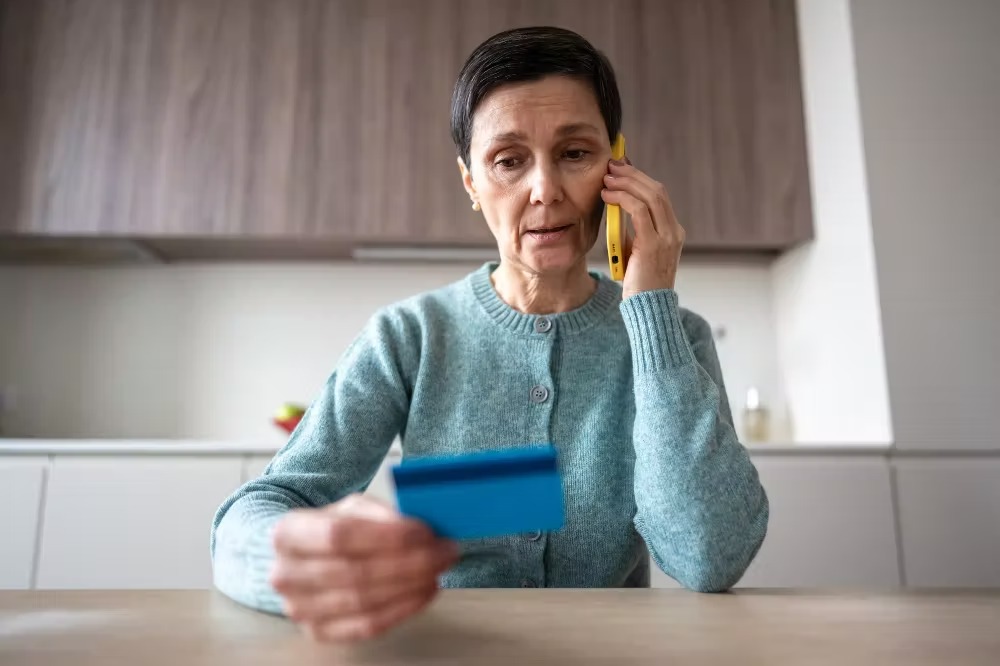
You might receive a call from someone who sounds exactly like a grandchild claiming they’ve been in an accident or need bail money. These calls are designed to create panic so you’ll act without thinking.
The Best Defense: If you receive a call like this, hang up immediately. Call that family member directly on their known phone number. A quick “Hey, are you okay?” is the fastest way to verify the truth and protect your funds.
IRS and Medicare Impersonation
We also see a high volume of scammers pretending to be officials from the IRS or Medicare. They often use “scare tactics,” claiming there is a problem with your benefits or that you owe back taxes that must be paid immediately via wire transfer or gift cards.
It’s important to remember that legitimate government agencies will not call you out of the blue to threaten you, nor will they ever demand payment through irregular methods like gift cards. If someone pressures you to make a snap decision about your healthcare or taxes, take a breath. Give us a call or come by the branch; we’ll help you determine if the communication is legitimate.
Phone Spoofing
We’ve seen “phone spoofing” happen right here in our own neighborhood. This is a deceptive trick where scammers manipulate caller ID info to make it look like they are calling from a trusted source. They do this hoping you’ll lower your guard and “verify” your account details.
Please remember: Even if the caller ID looks correct, we will never call you to ask for your PIN, your full Social Security number, or your passwords. We also will never ask you to move your money to a “safe” account. If the conversation heads in that direction, hang up.
Better Safe Than Sorry
The most important thing to remember is that there’s no shame in being cautious. If something feels off, it usually is. We want every senior in our community to feel empowered to say “no” and hang up the phone.
If you’re ever unsure whether a message was legitimate or not, we’re always here to be that second pair of eyes for you. Whether it’s a suspicious letter, a weird text, or a call that didn’t sit right, bring it to us. We’ll look at it together to make sure you and your finances stay safe and sound.